BI Blog
Market Research Best Practices: A Checklist for Data You Can Trust
You are about to put a number into a slide. Maybe it is a market size, a satisfaction score, or a stat about how many buyers prefer your category of product. The number came from a survey, a panel, or a report somebody on the team pulled together. Nobody on the call is going to ask where it came from. They rarely do.
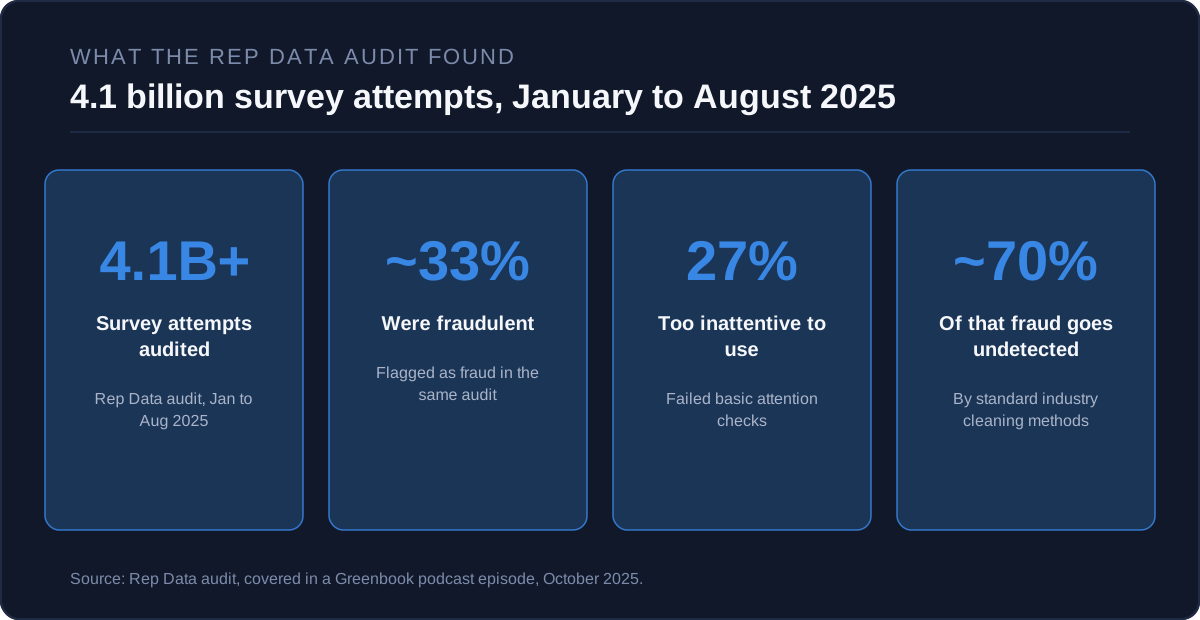
They probably should. A Greenbook podcast episode from October 2025, covering a Rep Data audit of more than 4.1 billion survey attempts collected between January and August of that year alongside Rep Data’s related fraud research, found that about a third of survey attempts are fraudulent. Another 27 percent come from respondents too inattentive to produce a usable answer. Worse, standard industry cleaning methods still let roughly 70 percent of that fraud through. That is not a fringe problem in a corner of the research industry. That is a meaningful share of the data pool online surveys draw from.
Most articles titled “market research best practices” are about how to run a study: pick a method, write clean questions, choose a sample. Useful advice, and necessary. But it skips the moment that actually matters to the person about to act on a finding, which is not “was this study designed well” but “can I trust what came out of it.” Here is a practical checklist for that second question, built for the point where a research based number is about to become a decision.
Why “best practices” usually stops one step too early
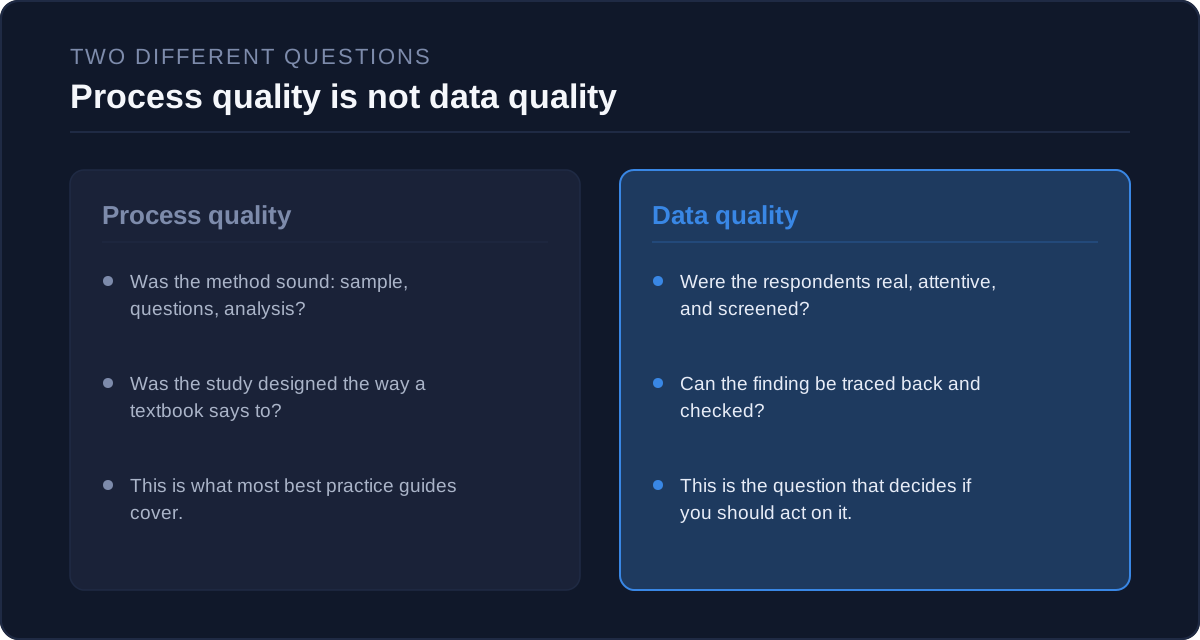
Search for market research best practices and you will find a consistent genre: define your objective, pick qualitative or quantitative, choose your sample, analyze and report. All true, all worth following. None of it tells you whether the specific report in front of you right now, from your own team, an outside vendor, or a panel platform, is something you can act on. Process quality and data quality are related but not the same thing. A well designed study fielded through a fraud heavy panel can still produce numbers nobody should trust.
The five point checklist, before you trust a market research finding
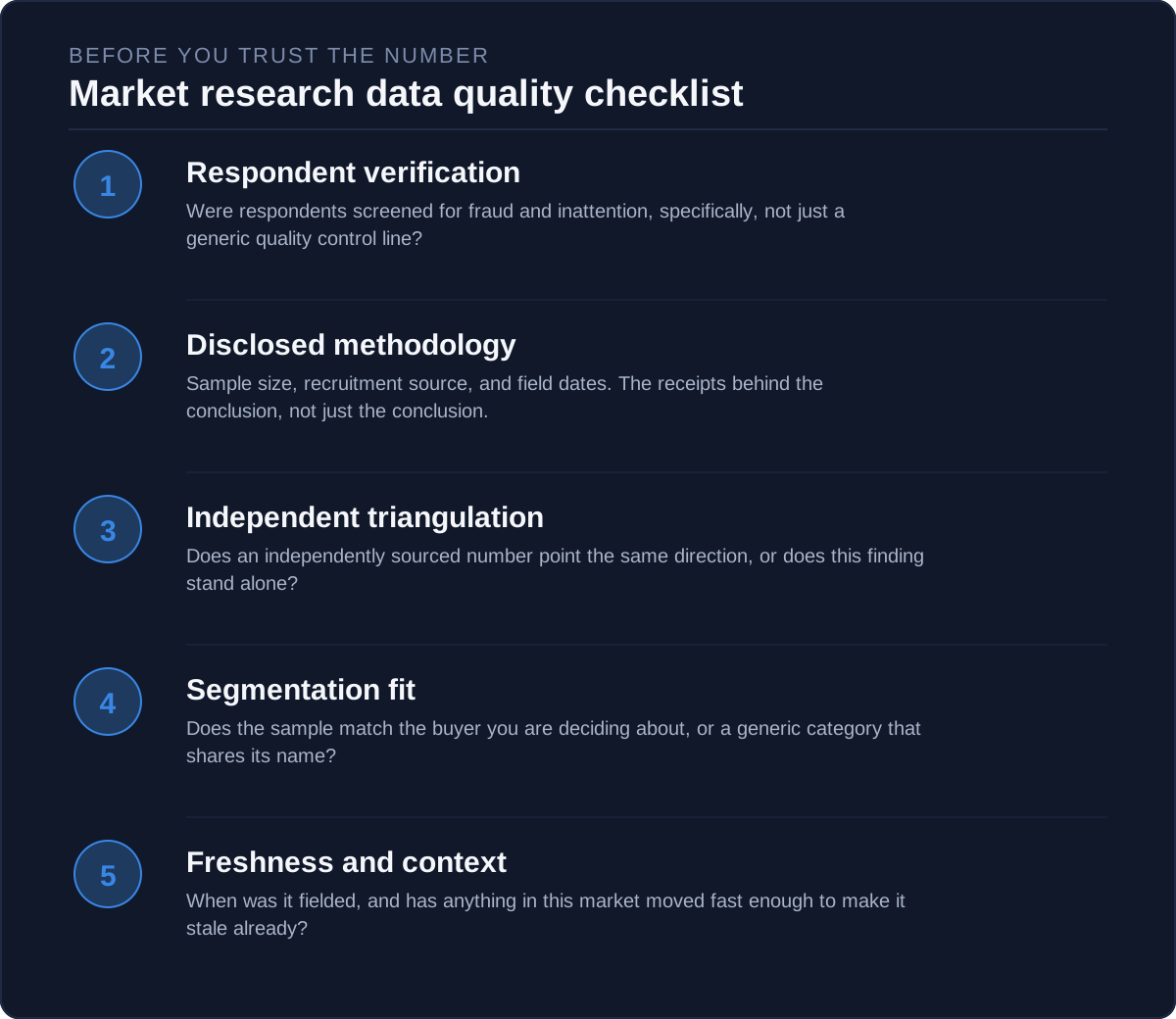
1. Respondent verification
Ask directly whether the data collection included fraud detection and attention checks, not just a generic “quality control” line. Given the fraud and inattention rates documented above, a report that cannot answer this question specifically has likely not asked it internally either.
2. Disclosed methodology
A trustworthy finding comes with its own receipts: sample size, how respondents were recruited, when the data was fielded, and what, if anything, was excluded after cleaning. If a report states a conclusion but not how it was reached, you are being asked to trust a number you cannot audit.
3. Independent triangulation
Does the finding hold up against at least one source that was not built the same way? We used this same logic when we walked through how investors stress test a market size estimate: a number that only exists inside one model, with no second method to check it against, is a guess wearing a decimal point.
4. Segmentation fit
A result can be statistically clean and still be the wrong population. A survey of “small business owners” that is 80 percent sole proprietors will not tell you much about how a 50 person firm buys software. Check whether the sample matches the buyer you actually care about, not a generic category that happens to share its name.
5. Freshness and context
Ask when the data was fielded and whether anything in the market has moved since. A pricing study from eighteen months ago, in a category where competitors change pricing quarterly, is not current information. It is history being presented as a forecast.
What this looks like outside a checklist
This is also why outsourcing research to a team that treats verification as a default step, not an add on, changes the risk profile of the number you end up with. A consulting firm filling a capacity gap with an outsourced research team, or a firm building out research support for client work, is betting on the same thing: that whoever ran the numbers actually checked them against this kind of list before handing them over. The same logic applies to a startup founder sizing a market before a raise, covered in our piece on market research for startups, where a defensible number matters more than an impressive one.
None of this requires expensive tooling. A research team or vendor that can answer all five questions in a single email, with specifics rather than reassurance, has probably already built verification into how they work. One that cannot has told you something too, just not the thing they meant to.
A quick way to pressure test any report before you use it
Before a market research number goes into a deck, a strategy memo, or a client report, run it through these five questions. If you get a clear, specific answer to all five, the number has earned a place in your decision. If you get a vague answer to even one, treat the number as a starting point for more research, not as the research itself.
- Were respondents checked for fraud and attention, specifically, not generically?
- Is the methodology (sample size, recruitment, field dates) disclosed, not just the conclusion?
- Does an independent source point in the same direction?
- Does the sample actually match the buyer you are deciding about?
- Is the data recent enough for how fast this market moves?
Frequently asked questions
How can I tell if a market research report is reliable?
Check whether it discloses its methodology (sample size, recruitment source, field dates), whether the data collection included fraud and attention screening, and whether the finding holds up against at least one independently sourced number. A report that volunteers this information without being asked is a good early sign.
What percentage of survey data is actually fraudulent?
Based on the Rep Data audit cited above, about a third. Another 27 percent comes from inattentive respondents, and standard cleaning methods miss roughly 70 percent of that fraud.
Does a larger sample always mean more reliable data?
No. A large sample drawn from the wrong population, or contaminated by unscreened fraudulent and inattentive respondents, is still unreliable. Sample size only helps once respondent quality and segmentation fit are already in place.
Talk to Us About Your Research
Further reading: 7 Best Practices for Customer Market Research Surveys covers the survey design side of this question in more depth.