BI Blog
Market Research for Startups: What It Costs and Includes
Why “just build it and see” gets expensive fast
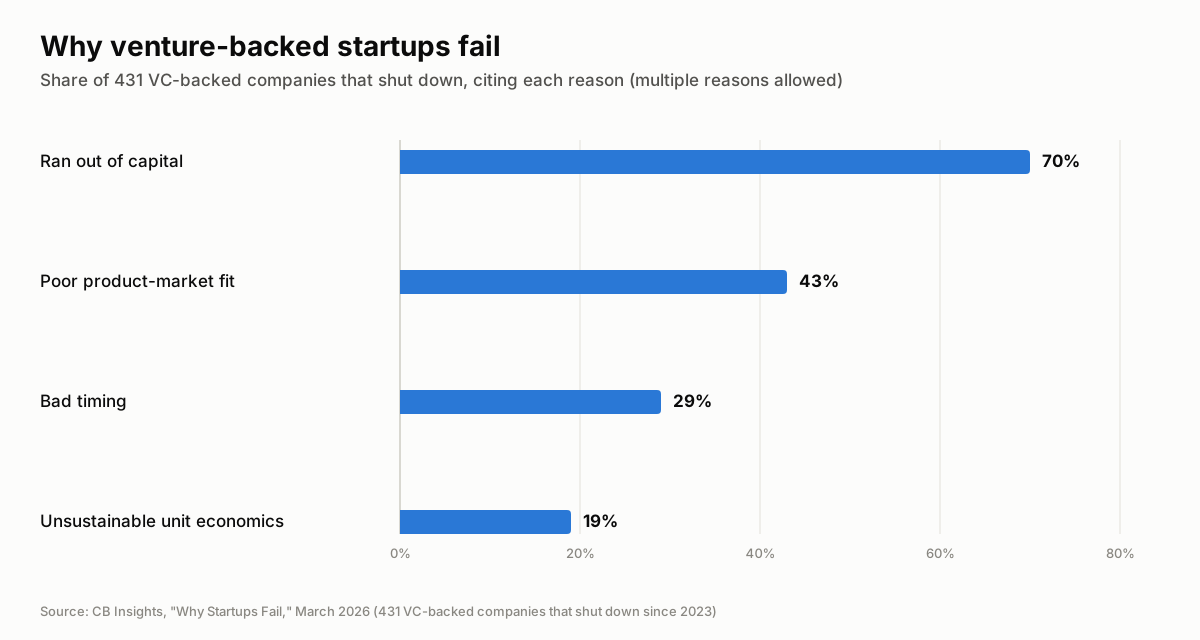
Forty three percent of venture backed startups that shut down since 2023 cite poor product-market fit as one of the reasons they failed, second only to running out of capital, according to CB Insights’ analysis of 431 failed companies, published March 2026. That statistic sits behind almost every founder’s real fear: spending a year building something the market was never going to buy.
Most founders already know they should validate a market before committing real money to building it. Fewer know what that actually costs, how long it takes, or whether the question in front of them needs a five figure agency retainer or an afternoon with a spreadsheet. That uncertainty is often the reason research gets skipped entirely, and skipping it is exactly the gap the data above is describing.
This page covers what startup market research actually involves, when it is worth paying for, what a BI Company engagement includes, what it costs, and three real examples of the kind of research founders have used to make a go or no go call before committing budget to building.
DIY, a freelancer, an agency, or a fixed price partner: how the options compare
There is no single right way to validate a market. The right choice depends on how much time a founder can give it, how much rigor the decision needs, and how much budget uncertainty the team can tolerate. Drive Research, a research firm that publishes its own startup guidance, tells founders to budget somewhere between 3,000 and 15,000 dollars for outside help, without committing to a fixed number up front. Waveup, a startup focused research firm, does not publish pricing at all and quotes each project individually. Neither approach is wrong, but neither gives a founder a number to plan around before the first call.
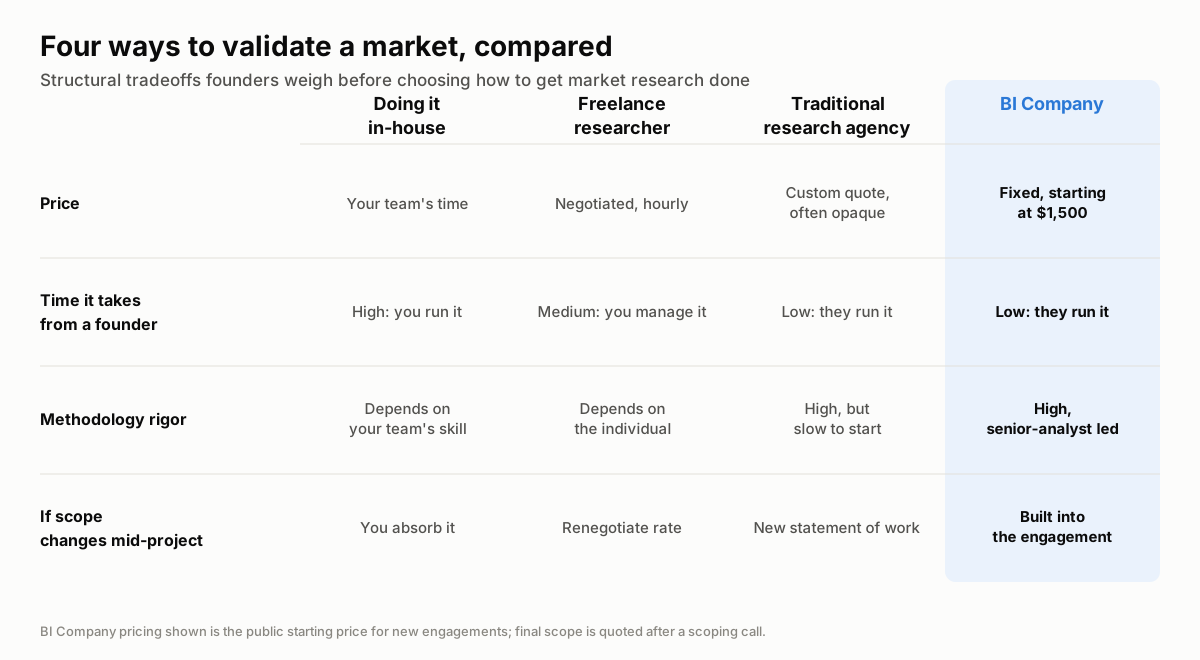
BI Company’s engagements start at a fixed 1,500 dollars, quoted after a short scoping call once the actual research question is clear. That entry price covers a focused question, such as a competitive landscape check or a narrow customer validation pass. A study with the scope of the examples below, built on a multi market survey or a 100 plus page report, is quoted higher once the scoping call defines what it actually needs. Either way, the price does not move once it is set, because scope changes discovered mid project are built into how the engagement is quoted from the start.
What a BI Company startup market research engagement includes
- Market sizing and opportunity framing. A top-down and bottom-up TAM, SAM, and SOM model when the goal is fundraising or resourcing, sized from real data rather than a single analyst assumption.
- Target customer and buyer validation. Testing who actually wants the product, not just who the founding team assumed would want it.
- Competitive landscape mapping. Direct and indirect competitors, positioning gaps, and pricing context.
- Primary research when the question needs it. Surveys, interviews, or concept testing, run when desk research alone cannot answer the question with confidence.
- A decision ready report. Findings organized around the decision a founder actually has to make, not a raw data dump.
How this connects to product market fit
Product market fit is not something you feel your way into. It is the point where the findings from the research above, who actually wants this, what they will pay, and how crowded the space already is, line up with what you have built. Founders who skip straight to building often mistake early enthusiasm from friendly users for product market fit, then struggle to explain why growth stalls once they reach a colder audience. A market research engagement gives you the evidence to tell the difference before you have spent months building toward the wrong signal.
Real examples of startup market research done this way
Validating an app’s positioning before a relaunch: Socialise.ai
Socialise.ai needed to understand the global and Australian health and wellness app market before deciding how to position an alcohol tracking and mental health app. BI Company ran secondary research across six competitor profiles, built a TAM/SAM/SOM sizing model, surveyed 271 potential users, and conducted four in depth user testing interviews, compiled into a 128-page study.
The research surfaced a finding the team had not built their strategy around: health conscious people generally do not identify as drinkers, and people who identify as drinkers generally do not think of themselves as health focused. That single insight led the client to restructure their target market, positioning, and pricing strategy before investing further in the product. “Working through the detail, it is excellent, thank you for your time and the work thus far, it’s been extremely helpful,” said Bianca Brady, co-founder of Socialise.ai. Read the Socialise.ai case study.
Validating demand for a new hardware category
A hardware company developing a new smart home device had no established market or pricing benchmark to test against. BI Company ran a three stage study: a discovery phase to map use cases and pre test concepts, a quantitative survey of more than 1,220 respondents across seven markets in the US and Western Europe, and qualitative interviews to understand the reasoning behind the numbers. The result was an OEM ready evidence package that validated real demand in the category, defined an optimal price range and feature set, and sized the opportunity for both product and fundraising conversations. Read the smart home device case study.
Choosing which industry to enter first
An AI workflow automation company had a working product and needed to decide which industry vertical to prioritize first, rather than which to serve eventually. BI Company benchmarked nine candidate industries across five factors, including AI investment potential, industry growth, labor intensity, and automation demand, then built a market opportunity map ranking each niche by automation intensity and go to market accessibility. The client used the output to prioritize the niches with the fastest path to ROI and to build buyer personas and target account lists for each. Read the AI workflow automation case study.
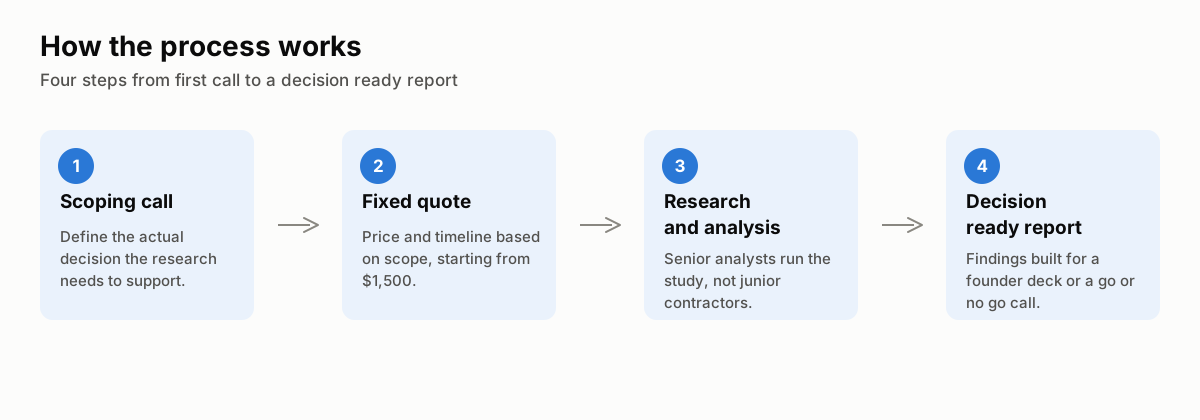
How the process works
Frequently asked questions
How much does market research for a startup cost?
It depends on scope. BI Company’s startup engagements start at 1,500 dollars for a focused question, with the exact price quoted after a scoping call once the research question and methodology are clear. Broader industry guidance from other research firms puts typical outside research budgets for early stage startups in the 3,000 to 15,000 dollar range, though pricing approaches vary firm to firm.
How long does startup market research take?
A focused secondary research and competitive mapping project can turn around in one to two weeks. Projects that include primary research, such as the 271 person survey behind the Socialise.ai case study or the multi market survey behind the smart home device study, typically run several weeks to allow for fieldwork and analysis.
Do I need market research before building an MVP?
Not always in full, but some version of it is worth doing before committing serious budget to a build. The CB Insights data above shows poor product-market fit as the second most common reason venture backed startups fail. A focused study, even a narrow one, is usually far cheaper than the alternative of building the wrong thing first and finding out from the market later.
What is the difference between market research and talking to customers myself?
Founder conversations with early customers are valuable and should keep happening regardless of any outside research. What a structured study adds is scale, a consistent methodology, and a way to size the opportunity and benchmark competitors that is difficult to do credibly from a handful of informal conversations alone.
Get a scoping call
Tell us the decision you are trying to make and we will tell you honestly whether it needs a full study, a lighter desk research pass, or just a conversation.