BI Blog
Market Research Outsourcing for Consulting Firms
It is Tuesday afternoon. A client just moved up a due diligence deadline by two weeks, and your best analyst is already booked on a strategy sprint that can not wait either. You could do the research yourself at a billing rate that makes no sense, post the brief on a freelance platform and hope, or tell the client no.
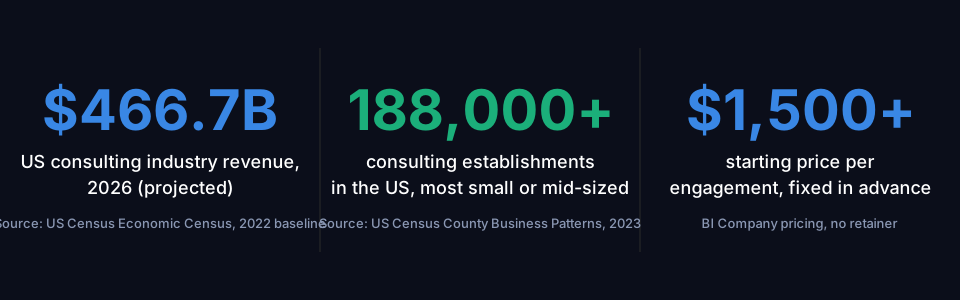
If that sounds familiar, you are not running an unusual firm. You are running one of the more than 188,000 consulting establishments in the US, most of them small or mid sized, all competing for work without the steady research volume that would justify a full time analyst on staff (US Census County Business Patterns, 2023). The research need is real. It is just never steady enough to hire for, and never small enough to ignore.
That is the gap BI Company fills: an outsourced research bench you brief like a team member, not a vendor you have to manage. Send a scope, get back decision ready secondary research, competitive intelligence, or survey based findings your consultants can put straight into a client deliverable, typically in 5 to 10 business days, starting from $1,500 per engagement. No retainer.
Why this keeps happening (and why the usual fixes do not work)
Client work is lumpy by nature. A due diligence engagement lands the same week a strategy sprint needs its competitive landscape refreshed, and neither can wait for you to source, brief, and vet a freelancer from scratch. Hiring fixes the capacity problem but not the peak load one: most firms do not have enough steady state research work to justify a headcount, and a single generalist hire rarely covers every industry a consultancy touches in a given quarter.
The freelance route has its own problem, and it is not really about the invoice. A freelance marketplace can work for a narrow, well scoped task, but pricing is negotiated hourly project by project with no fixed number until the work is already underway, quality swings with whichever specific person picks up your brief, and there is no continuity: the next project starts from zero with someone new who does not know how your firm likes work packaged. It gets risky fast once a project needs real judgment, a senior analyst’s time, or more than a few days of work, and you are still the one managing quality, vetting, and deadlines yourself.
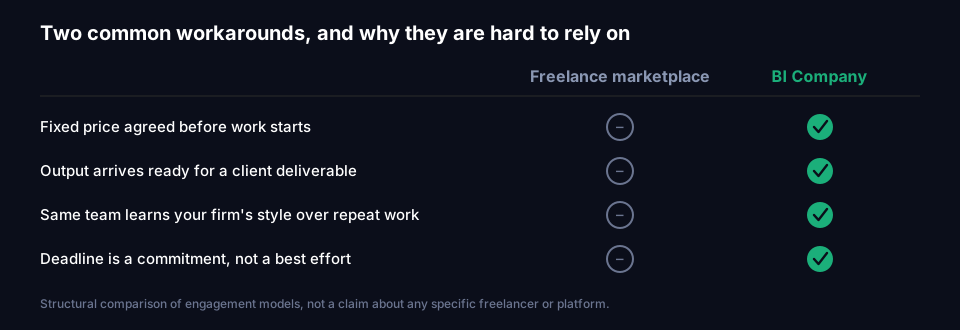
What most firms end up doing instead is one of three workarounds. A partner does the research personally, at a cost per hour that no client would ever approve if they saw the math. A rotating cast of freelancers delivers inconsistent quality with no institutional memory of how your firm likes work packaged. Or a client deliverable quietly leans on desk research that is a year out of date, because refreshing it properly did not fit the timeline.
None of those hold up when a client is paying consulting rates for the output.
How working with us actually goes
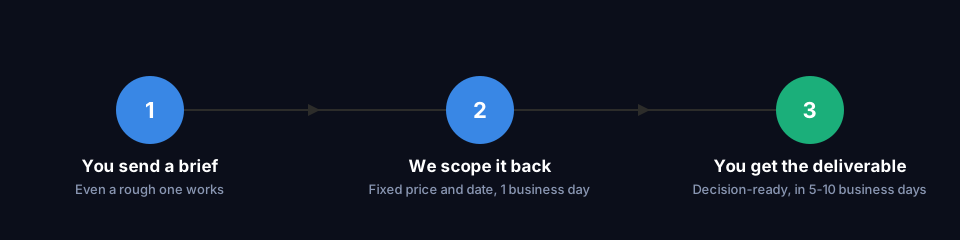
You send a brief, even a rough one. We scope it back within one business day with a fixed price, a delivery date, and a clear description of what you will receive: a memo, a data backed slide set, a comparison table, whatever slots into your deliverable. Once you confirm, an analyst is assigned and works directly against your brief, with a check in at the midpoint of longer engagements. What comes back is a document your team can use directly or fold into your own template, not a raw research log.
For a first engagement, start small: a single competitor deep dive or a market sizing sanity check. That gives you a real read on quality and turnaround before you hand us a bigger piece of client work.
What you actually get
- Secondary and desk research packages: synthesis across a market, competitor set, or customer segment, with every claim sourced
- Competitive intelligence deliverables: positioning, pricing signals, hiring and product launch activity, estimated scale for private companies
- Survey based primary research when the brief calls for original data instead of synthesis
- Decision ready formatting: a memo or slide ready summary your team edits into your own deliverable, not a raw data dump
Need a deeper, ongoing engagement instead of a one off brief? See our competitor analysis and market intelligence services for the recurring version of this work.
Two engagements that show what “nonstandard brief” means in practice
A Reddit intelligence system for a regulated financial brand. The client needed ongoing visibility into how their category was being discussed on Reddit, a channel most media monitoring tools cover poorly, without breaching the compliance constraints that come with operating in regulated finance. We built a repeatable process instead of a one off report, so the client’s own team could keep running it after handoff.
Finance job posting analysis for a thought leadership strategy. Instead of a conventional market report, this engagement used hiring data across the finance sector as a proxy signal to support a client’s content strategy. It is the kind of lateral, evidence based angle a consulting deliverable benefits from, and a generic research vendor typically would not think to propose.
What it costs
Engagements start from $1,500 and scale with scope: a single competitor profile costs less than a multi market sizing exercise with primary survey work attached. You get a fixed price before work starts, not a time and materials estimate that can run over.
Is outsourcing the right call for this engagement? A quick check
- The research need is real but one off or irregular, not steady enough to justify a hire
- The topic sits outside your team’s core expertise, a new industry or a market you do not normally cover
- A partner or senior consultant is currently doing desk research personally, at a cost far above what outsourcing it would cost
- The deadline is tighter than your internal team can realistically source and vet a freelancer for
- You want one consistent deliverable format across projects, not a different freelancer’s style every time
Two or more of these true, and outsourcing this specific engagement is likely faster than sourcing and vetting a freelancer yourself, and it frees up a partner’s time that would otherwise go to research instead of client work.
FAQ
How fast can you actually turn around a brief?
Most single topic secondary research engagements deliver in 5 to 10 business days from scope confirmation. Tighter deadlines can sometimes be accommodated, ask when you send the brief.
Do you sign NDAs, and can this stay white label?
Yes. Engagements are confidential by default, and deliverables are formatted so they can go straight into your own client facing materials.
What if the first draft does not match what we needed?
Scoping happens before work starts specifically to prevent this. If the brief turns out to have been ambiguous, revisions that bring the work back in line with the original scope are included.
Do we need a retainer or minimum commitment?
No. Engagements are scoped and priced individually. Firms that come back repeatedly do so because the first engagement worked, not because of a contract.