BI Blog
Market Sizing and TAM SAM SOM Research Services
In the first quarter of 2026, seed stage companies closed 21 percent fewer rounds than a year earlier, while total seed capital raised rose 25 percent over the same period (Carta, State of Private Markets, Q1 2026). Fewer deals are getting done. The ones that do close are larger, and the founders behind them had to clear a higher bar to get there.
The market size slide is one of the first places that bar gets applied. In a roundup of pitch deck mistakes published in August 2025, Filip Bogdziun, an investment manager at Hard2Beat, put it plainly: many decks replace real market analysis with generic Venn diagrams and random TAM, SAM, and SOM numbers (Vestbee, 2025). An investor who has reviewed hundreds of these slides can usually tell quickly whether the number in front of them was researched or just typed in to fill a box.
If you are preparing a fundraise, a board update, or a market entry decision, and the market size behind it would not survive someone asking where the number came from, this is what a properly sized market looks like, and how BI Company builds one.
Why the generic TAM slide stops working
Most market size slides start the same way: find a large published market number, then claim a slice of it with an assumed percentage. The arithmetic is simple, which is exactly the problem. A slice of a round number says nothing about who would actually buy, how many of them exist, or what they would pay, and an experienced investor reads that gap immediately.
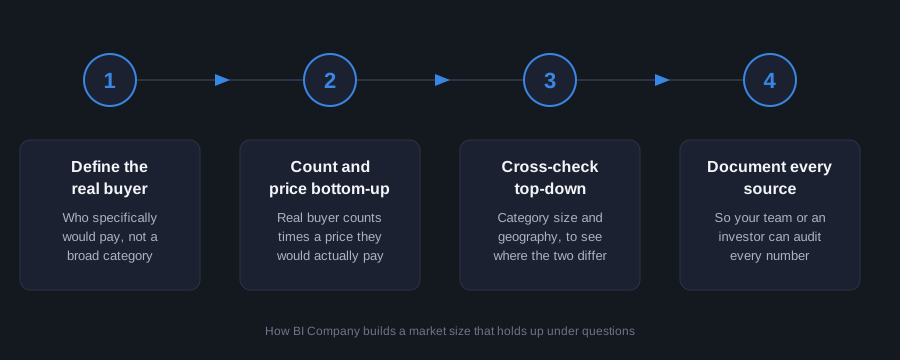
A defensible number starts from the other direction. Bottom-up sizing counts the real buyers in your addressable market, multiplies by a price they would actually pay, and only then gets checked against a top-down category estimate, not the other way around. The two numbers rarely match exactly. Where they diverge is not an error. It is a map of every assumption still worth testing before the number goes on a slide.
What a market sizing engagement includes
Send us the product, the target buyer, and the decision the number needs to support: a fundraise, a board update, a market entry case, or a diligence check on a target company. What comes back includes:
- A bottom-up TAM, SAM, and SOM model built from real counts of buyers, realistic pricing, and the segment your product can actually serve today, not a percentage sliced off a round number
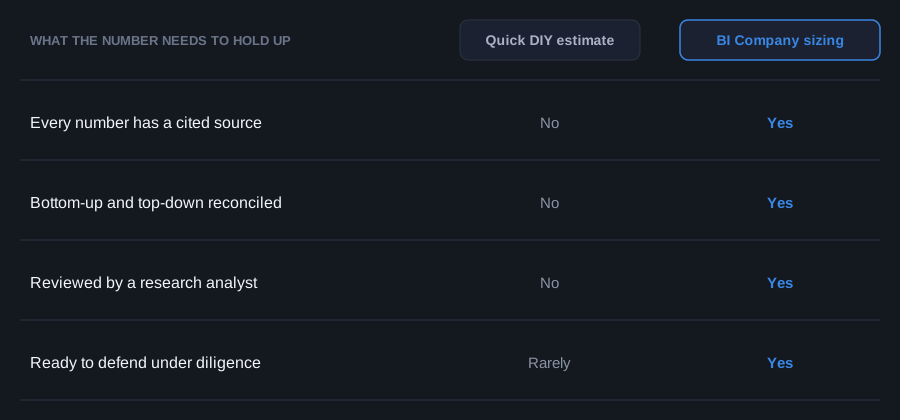
- A top-down cross-check using category and geography data, reconciled against the bottom-up figure so the gap between the two numbers is explained rather than hidden
- A documented source and assumption ledger your own team, a co-investor, or a diligence analyst can audit line by line
- A decision-ready summary formatted for a pitch deck slide, a board memo, or an internal strategy document, not a raw spreadsheet
Who asks us for this
Startup founders preparing a fundraising deck who need their TAM, SAM, and SOM to survive investor questions, not just fill a slide. See what investors actually check in your TAM, SAM, and SOM before they fund you for the specific questions worth preparing for ahead of time.
Consulting and advisory firms that need a defensible market size figure for a client deliverable but do not have a free analyst this week. If this is a recurring need rather than a one-off, our outsourced research model for consulting firms covers the ongoing capacity option.
Investors and corporate strategy teams confirming a target company’s own market size claim before committing capital, rather than taking the company’s slide at face value.
What it costs
Engagements start from $1,500 and scale with scope. A single bottom-up model for an early product costs less than a multi-segment model with a full top-down cross-check and investor-ready formatting attached. You get a fixed price agreed before work starts, not a time and materials estimate.
A quick check: does your market size need this
- Your TAM, SAM, and SOM numbers were built by typing a percentage into a template, not from an actual count of buyers
- You are raising capital soon and want the market slide to survive direct questions, not just look complete
- You are evaluating a target company’s market size claim and need an independent figure to compare it against
- A previous fundraising conversation got specific pushback on the market size slide
If two or more of these are true, an independently sized market is worth doing before the next conversation, not after it stalls on this exact question.
FAQ
How is this different from a market sizing template or calculator?
A template asks you to fill in a percentage. We build the buyer count and pricing from real research specific to your product and market, then show the sourcing behind every number, not just the formula.
Do you size bottom-up, top-down, or both?
Both. Bottom-up is the primary, defensible number. Top-down is a cross-check, and we explain the gap between the two rather than picking whichever number looks better on a slide.
How fast can this be turned around?
Most single-market engagements deliver in 5 to 10 business days from scope confirmation, matching the timeline on our other research engagements. Tighter deadlines can sometimes be accommodated, ask when you send the brief.
Will this work if we are pre-revenue with limited data?
Yes. Early-stage sizing leans more heavily on primary assumptions, the addressable buyer count and achievable pricing, which we document explicitly rather than hide behind a confident-looking number.
Do you sign NDAs and can this stay confidential?
Yes. Engagements are confidential by default, and findings are formatted so they can go straight into your own pitch deck or board materials.